
Why Your Lawn Looks Thin in Port Charlotte?
Updated: Oct 10
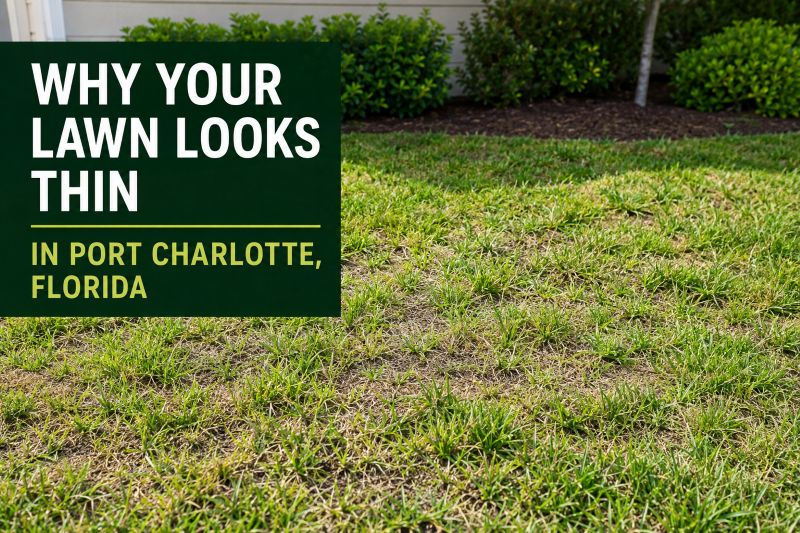
In Port Charlotte, thinning grass is one of the most common signs that a lawn is struggling with stress, inconsistent growth, or moisture-related problems. What begins as a few weak or patchy areas can gradually spread across larger parts of the yard during Florida’s hotter and wetter months.
Many homeowners first notice their lawn looking thinner after periods of heavy rain, rapid summer growth, inconsistent watering, or mowing that falls behind during the growing season. Thinning grass usually develops slowly before larger lawn problems appear.
Why Thin Grass Is Common in Port Charlotte
Florida lawns deal with constant environmental stress throughout much of the year. In Port Charlotte, high humidity, frequent rainfall, prolonged heat, and rapid grass growth make it harder for lawns to maintain thick, even coverage.
Grass thins when stressed by excess moisture, poor airflow, inconsistent mowing, or prolonged heat.
Some of the most common conditions that contribute to thinning grass include:
excessive moisture buildup
mowing too infrequently
cutting grass too short
poor watering habits
compacted soil
prolonged heat stress
shaded areas
Thin areas often begin appearing in sections of the lawn that stay damp longer after rain or struggle to receive consistent sunlight and airflow.
Routine lawn maintenance in Port Charlotte helps reduce lawn stress and allows grass to grow more evenly throughout the year.
Common Signs Your Lawn Is Thinning
Homeowners first notice thinning when sections of the lawn begin looking weaker, patchier, or less dense than surrounding areas.
Some common warning signs include:
patchy or uneven lawn coverage
grass that looks weak or sparse
thinning near edges or shaded areas
areas where soil becomes more visible
sections of grass that struggle to grow evenly
weak areas that spread over time
In Port Charlotte, thinning usually appears before weeds, discoloration, or larger damaged areas begin developing.
Thinning areas also become more visible during periods of heavy rain or rapid summer growth.
If your lawn is already showing signs of discoloration, it may help to understand why your lawn turns yellow in Port Charlotte, Florida
How to Tell What's Causing Thin Grass in Your Port Charlotte Yard
Where your lawn is thinning can provide useful clues about what's causing the problem. Before changing your watering or mowing routine, look at the conditions in the affected areas.
Thin grass under trees or beside buildings
Areas receiving limited sunlight may struggle to maintain thick coverage, especially if the grass variety isn't well suited for shade. Tree roots can also compete with grass for water and nutrients.
Thin patches that stay wet after rain
Low areas, poor drainage, and excessive irrigation can leave soil saturated for extended periods. Grass roots need oxygen, and consistently wet soil can weaken turf.
Thinning along driveways or high-traffic areas
Repeated foot traffic, vehicle pressure, or soil compaction can restrict root growth. These areas may remain thin even when the rest of the lawn looks healthy.
Thin grass accompanied by yellowing or brown patches
Discoloration can result from watering problems, nutrient deficiencies, insects, diseases, or other lawn stress. The appearance of the affected grass and how quickly the damage spreads can help narrow down the cause.
Weeds spreading through thin areas
When healthy grass loses density, weeds have more room to establish themselves. Homeowners dealing with this problem can also read our guide to weeds in Port Charlotte lawns.
These observations won't identify every lawn problem, but they provide a better starting point than simply watering more or cutting the grass shorter.
How Watering and Mowing Affect Lawn Thickness
Watering and mowing habits directly affect how thick and healthy grass remains throughout the year.
Lawns that receive too much water may struggle with excess moisture buildup, while lawns that stay too dry often weaken during Florida’s hotter months.
Mowing habits also play a major role.
Letting grass grow too long between mowing visits can lead to removing too much of the leaf blade in a single cut, which stresses the lawn. Cutting grass below the recommended height for its variety can also weaken growth. Consistent mowing at the proper height helps reduce unnecessary stress and maintain healthier turf.
Keeping a consistent mowing schedule helps healthy grass maintain stronger and more even coverage throughout periods of rapid growth.
This is one reason why watering your lawn at the right time in Port Charlotte is important for maintaining healthier lawn conditions throughout Florida’s warmer months.
If growth has started becoming difficult to manage, it may also help to understand how often lawns should typically be mowed in Southwest Florida
Can Thin Grass Recover on Its Own?
Mild thinning often improves with consistent watering and mowing, especially during milder weather.
But recurring thinning continues when underlying lawn conditions do not improve.
If excess moisture, heat stress, overgrowth, or inconsistent maintenance continue, weak areas become more vulnerable to weeds, discoloration, and additional lawn stress over time.
This is especially common during Florida’s rainy season when lawns are already dealing with rapid growth and prolonged moisture at the same time.
The earlier lawn stress is addressed, the easier it is to prevent thinning from spreading further across the yard.
How to Help Keep Your Lawn Thick and Healthy
Thicker grass requires reducing lawn stress and creating more consistent growing conditions throughout the year.
Some of the best ways homeowners in Port Charlotte can help improve lawn thickness include:
maintaining a consistent mowing schedule
avoiding excessive overgrowth
watering properly during dry periods
reducing excess moisture buildup
improving airflow across shaded areas
monitoring weak or thinning sections early
Healthy grass naturally grows thicker when moisture, airflow, and mowing conditions remain more consistent over time.
If your lawn has started looking patchy or difficult to manage during periods of rapid growth, lawn care services in Southwest Florida help keep maintenance consistent throughout the year.
When Thin Areas Keep Returning
If the same parts of your lawn continue thinning despite consistent mowing and proper watering, the problem may require more than routine maintenance.
Start by comparing the affected areas with the healthy parts of your yard. Are they receiving less sunlight? Does water collect there after rain? Is the ground unusually hard or compacted?
Persistent thinning can also result from insects, fungal diseases, or other turfgrass problems that require proper identification before treatment.
If the grass has completely died, improving mowing and watering habits alone may not restore coverage. Some areas may need additional lawn care or replacement grass after the underlying problem is corrected.
Identifying why the same areas continue struggling helps prevent repeating maintenance changes that never address the actual cause.
Keep Your Lawn Healthy in Port Charlotte
Thin grass is often one of the earliest signs that a lawn is struggling with moisture, heat, overgrowth, or inconsistent maintenance.
In Port Charlotte, Florida’s long growing season and humid conditions can quickly place additional stress on lawns that are already weakened by poor watering or mowing habits.
Keeping your lawn maintained with consistent lawn care in Port Charlotte helps reduce overgrowth and allows healthy grass to maintain stronger coverage throughout the year.
In nearby areas, routine lawn maintenance in North Port helps homeowners stay ahead of rapid growth and lawn stress before larger lawn problems begin developing.


Comments