
Signs Your Grease Trap Is Full
- Apr 26
- 3 min read
Updated: Jul 19
Grease traps show warning signs before major plumbing backups or wastewater problems disrupt kitchen operations.
Restaurants, food trucks, cafeterias, and commercial kitchens produce grease, oils, and food waste every day. Over time, that material builds up inside the grease trap and reduces the system's ability to process wastewater efficiently.
Without regular cleaning, buildup leads to slow drains, strong odors, backups, grease overflows, and interruptions to normal kitchen operations.
A full grease trap shows warning signs before it fails. Commercial kitchens see slow drains, stronger odors, recurring backups, or visible grease buildup before larger wastewater problems affect daily operations.
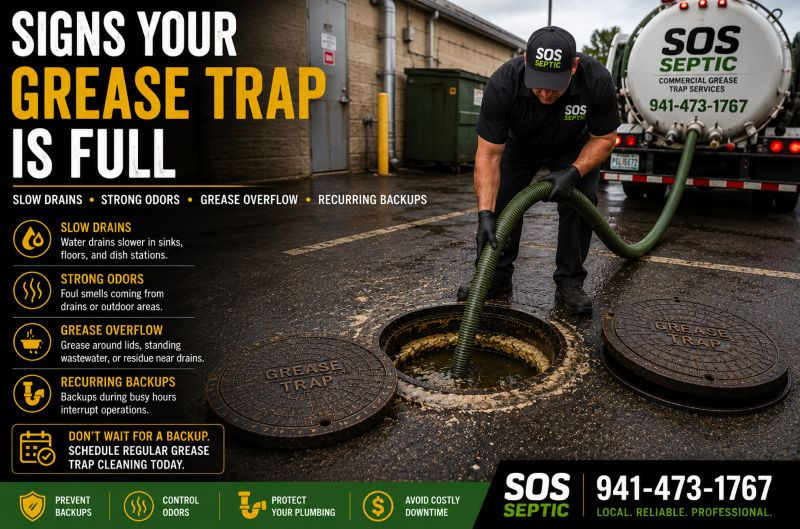
Slow Drains Are One of the First Warning Signs
Slow drainage is one of the earliest signs that a grease trap is reaching capacity.
As grease and food solids accumulate inside the trap, wastewater moves through the system more slowly. Kitchen staff notice the problem first around prep sinks, dishwashing stations, and floor drains where wastewater volume is highest.
Common warning signs include:
Sinks draining slower than normal
Standing water near floor drains
Water pooling around prep areas
Dishwashing stations taking longer to clear
Gurgling sounds from drains
Drainage problems during lunch and dinner rushes
Kitchens continue operating through these warning signs because the problem develops gradually.
As buildup increases, wastewater flow continues slowing until backups begin affecting daily operations.
Businesses dealing with recurring drainage issues should review How Often Should a Grease Trap Be Cleaned?
Strong Odors Near Drains or the Grease Trap
Strong odors are another sign that grease buildup inside the trap has reached excessive levels.
As grease, food solids, and wastewater sit inside the system, decomposition creates foul-smelling gases that travel through drains, grease trap access points, and surrounding service areas.
Odors show up around:
Sinks
Floor drains
Dishwashing stations
Grease trap access points
Outdoor interceptor areas
Kitchen staff describe the smell as sour, rotten, or similar to standing wastewater.
Businesses attempt to mask these odors with cleaning chemicals or deodorizing products. The smell returns because the source of the problem remains inside the grease trap.
Persistent odors are connected to grease buildup. Read Why Does My Grease Trap Smell?
Grease Overflow Around the Trap
A grease trap that is too full allows grease or wastewater to escape areas where it should remain contained.
Warning signs include:
Grease collecting around access lids
Grease residue near drains
Standing wastewater near floor drains
Wastewater backing into sinks
Overflow around outdoor interceptor lids
Grease buildup around manhole covers
Outdoor grease interceptors show visible warning signs before larger plumbing problems develop. Grease around the lid area, wastewater pooling nearby, or residue around the opening indicates the system is struggling to process normal kitchen volume.
At this stage, sanitation concerns and cleanup requirements become more common as wastewater spreads beyond the grease trap itself.
Backups During Busy Kitchen Hours
Grease trap problems become most noticeable during lunch and dinner rushes when kitchen activity increases.
As sinks, dishwashers, and prep stations generate more wastewater, overloaded grease traps struggle to handle the additional volume.
This leads to:
Sink backups
Floor drain backups
Standing water in prep areas
Slower dishwashing operations
Employees working around wastewater issues
Drainage problems during peak operating hours
For restaurants operating at full capacity, backups create more than plumbing problems. They interfere with food preparation, slow kitchen workflow, disrupt staff productivity, and create sanitation concerns that affect daily operations.
Restaurants running multiple fryers or high-volume prep lines reach this stage shortly after missing scheduled grease trap cleaning.
Ignoring Warning Signs Creates Larger Problems
Grease trap problems do not improve on their own once buildup begins restricting wastewater flow.
Without cleaning, grease and food waste continue accumulating until wastewater flow becomes severely restricted.
Businesses face:
Emergency plumbing backups
Stronger kitchen odors
Grease overflows
Interrupted kitchen operations
Blocked drain lines
Expensive plumbing repairs
Emergency service calls
Operational downtime
Temporary downtime affects staff productivity, customer service, food preparation, and daily operations.
Read What Happens If a Grease Trap Isn't Cleaned? to understand how these warning signs develop into larger plumbing and wastewater issues.
Is Your Grease Trap Already Full?
Your grease trap should be inspected if:
Drains are slower than normal
Odors keep returning
Grease is visible around the trap area
Floor drains back up during busy periods
Kitchen volume has increased recently
The trap has gone beyond its recommended service schedule
Staff notice flies, roaches, or rodent activity near drains or interceptor areas
Waiting until wastewater backs up into the kitchen means the trap has been overloaded for some time.
Prevent Grease Trap Problems Before They Disrupt Operations
Routine grease trap cleaning removes grease and food solids before they create backups, odors, overflows, and costly interruptions to daily operations.
Businesses looking for local providers can explore Commercial Grease Trap Services.
Restaurants that need routine maintenance can learn more about restaurant grease trap cleaning services before buildup creates larger wastewater and plumbing problems.


Comments